Oxygen CoLab × ECRI

The Oxygen Concentrator Directory

Tried and tested oxygen concentrators for use in low-resource settings. Comprehensive lab testing of 11 models across 2023–2024.

Models tested 11
Testing period 2023–2024
Partners ECRI & LabTest Certification
Funded by FCDO
"The CoLab put out the Oxygen Concentrator Directory to bring transparency to the market. We hope this catalyses efforts to improve access to medical oxygen in low-resource settings through the manufacturing and purchasing of fit-for-purpose oxygen concentrators." — Nick Moore, Oxygen CoLab Operations Lead

Use this resource to

Make informed purchasing decisions based on your facility's environment and conditions.
Advocate for the procurement of concentrators suited to your health system or facility.
Improve the longevity of concentrators in use through understanding their strengths and weaknesses.

Why we did this testing

Sharp inequities regarding medical oxygen access were highlighted during the COVID-19 pandemic, leading to increased momentum from donors and global actors. Oxygen concentrators have a particularly important role in low-resource settings — especially smaller and more remote health facilities — and in low- and middle-income countries (LMICs) where access to large-scale oxygen sources is often unavailable or limited.

With many different makes and models available, a gap remained in evidence on performance, safety, usability, repairability, electrical resilience and energy efficiency. The Oxygen CoLab, a UK FCDO-funded initiative, undertook comprehensive lab testing of 11 models. Working with LabTest Certification and ECRI, testing replicates real-world performance scenarios in challenging environments: high heat and humidity, electricity volatility, and heavy dust.

Who is this for?

Any stakeholder along the medical oxygen supply chain with an interest in the performance, quality, and safety of oxygen concentrators.

Ministry of Health National Regulatory Agencies NGOs & Multilaterals Donors Suppliers & Distributors Medical Personnel Technical Personnel Administrative Personnel

Concentrators tested

Filter and sort the 11 tested models by rating, price, and performance criteria. Select any criterion label to expand detailed qualifier notes.

Caire logo
Caire Inc.

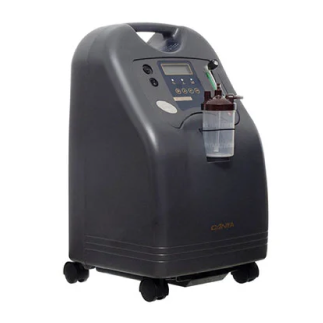
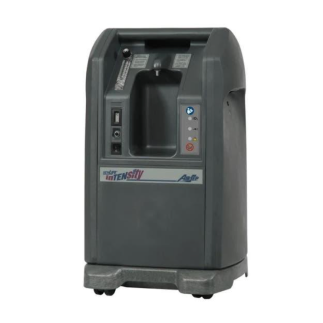
Newlife Intensity 10

★★☆☆☆ ££
Flow Range2–10 LPM
Performance Fair
Performed poorly in hot, humid conditions.
Safety Fair
No alarm for high pressure or occlusion.
UsabilityGood
RepairabilityGood
Elec. ResilienceGood
Energy EfficiencyGood
Canta logo
Shenyang Canta Medical Tech Co.

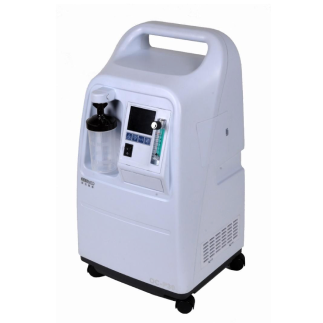
V10-W-NS

★☆☆☆☆ £ with optional alarms
Flow Range0–10 LPM
Performance Fair
Performed poorly in hot, humid conditions.
Safety Poor
No alarm for high pressure or occlusion.
No alarm for power loss.
UsabilityGood
Repairability Fair
Removing the unit enclosure is difficult.
Elec. ResilienceGood
Energy EfficiencyGood
Drive DeVilbiss logo
Drive Devilbiss Healthcare Inc.

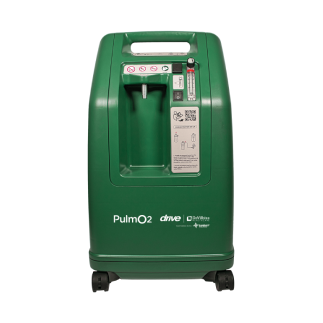
1025KS

★★★★☆ ££
Flow Range2–10 LPM
Performance Excellent
Performed well in hot, humid conditions.
Safety Excellent
Alarms for high and low flow.
UsabilityGood
RepairabilityGood
Elec. ResilienceGood
Energy EfficiencyGood
Jumao logo
Jumao Medical

JM-10A Ni

★★★☆☆ £
Flow Range0.5–10 LPM
Performance Good
Performed well after extended exposure to dust.
Performed poorly in hot, humid conditions.
SafetyGood
UsabilityGood
RepairabilityGood
Elec. ResilienceGood
Energy EfficiencyGood
Konsung logo
Jiangsu Konsung Bio-Medical

KSOC-10

★★☆☆☆ £
Flow Range≤10 LPM
Performance Fair
Performed poorly in hot, humid conditions.
Safety Fair
No alarm for high pressure or occlusion.
UsabilityGood
Repairability Fair
Vendor website has videos demonstrating repair tasks.
Removing the unit enclosure is difficult.
Removing internal components is also difficult.
Elec. ResilienceGood
Energy EfficiencyGood
Longfian logo
Longfian Scitech Co. Ltd.

Jay-10

★★☆☆☆ £ with optional alarms
Flow Range0.5–10 LPM
Performance Good
Performed well after extended exposure to dust.
Performed poorly in hot, humid conditions.
Safety Good
Has optional alarms. Configuring without them exposes patients to significant risk.
Usability Fair
Unit is low to the ground and difficult to manoeuvre.
Repairability Fair
Removing internal components is difficult.
Elec. ResilienceGood
Energy EfficiencyGood
Nidek logo
Nidek Medical Products Inc.

Nuvo 10 Model 1005

★★★★☆ ££
Flow Range2–10 LPM
Performance Good
Performed well after extended exposure to dust.
Performed poorly in hot, humid conditions.
Safety Excellent
Will not deliver more than rated flow (prevents diluted O₂ concentration).
UsabilityGood
RepairabilityGood
Elec. ResilienceGood
Energy EfficiencyGood
Olive logo
Zhengzhou Olive Electronic Technology

OLV-10S

★☆☆☆☆ £
Flow Range0–10 LPM
Performance Good
Performed well after extended exposure to dust.
Performed poorly in hot, humid conditions.
Safety Poor
No alarm for low oxygen concentration.
No alarm for high pressure or occlusion.
Usability Fair
No humidifier cleaning instructions — increases cross-contamination risk between patients.
RepairabilityFair
Elec. ResilienceGood
Energy EfficiencyGood
SysMed logo
Zhengjiang Huayin Instrument Co.

OC-S100 / OT Elite 10

★★☆☆☆ £ with optional alarms
Flow Range≤10 LPM
Performance Fair
Stopped operating after extended exposure to dust.
Safety Fair
No alarm for high pressure or occlusion.
Has optional alarms. Configuring without them exposes patients to significant risk.
UsabilityGood
RepairabilityGood
Elec. ResilienceGood
Energy EfficiencyGood
YuWell logo
Jiangsu Yuyue Medical Equipment

7F-10

★★☆☆☆ £ with optional alarms
Flow Range0–10 LPM
Performance Fair
One unit stopped operating in hot, humid conditions.
Safety Good
Has optional alarms. Configuring without them exposes patients to significant risk.
UsabilityGood
Repairability Fair
Removing the unit enclosure is difficult.
Elec. ResilienceGood
Energy EfficiencyGood
No concentrators match the selected filters.

Evaluation criteria

Tests were applied against six categories. Targets were derived from WHO 2020, WHO-UNICEF 2019 and UNICEF TPP specifications.

Testing mimicked varying environmental conditions including heat (20–40°C / 68–104°F), relative humidity (50–95%) and prolonged dust exposure.

Acceptable findings included:

  • Oxygen concentration ≥ 82% (preferably ≥ 90%) over the full flow range, within 5 minutes of start.
  • Flow accuracy: device flowmeter must match external test.
  • Output pressure > 55 kPa (preferred > 137 kPa).
  • Continued operation in environments up to 40°C and 50–95% relative humidity, including unpredictable duty cycles.
  • Continued operation after prolonged dust exposure.
  • Air intake not at the bottom; must have a gross particle filter and compressor intake filter.
  • Oxygen concentration and flow rate should be stable throughout use.
  • Devices should display delivered oxygen concentration in real time (e.g., green LED indicator).
  • Alarms required if concentration falls below 82%, flow is occluded, or power is lost.
  • Features that restrict overdraw are preferred.
  • Electrical components should be double insulated with a circuit breaker or fuse.
  • Devices should weigh < 27 kg, be stable against tipping, and have at least two casters.
  • If warm-up time exceeds 2 min, unit should indicate when warm-up is complete.
  • Noise should not exceed 60 dB at maximum flow (preferred < 45 dB).
  • User manuals available in English, Spanish and French, included in box and on manufacturer's website.
  • Filter changes should require no tools; cabinet filters should be washable.
  • Settings readable from an angle and distance; controls durable and hard to bump inadvertently.
  • Filters should be easy to access and remove; manuals must include cleaning/replacement instructions.
  • Units should have ultrasonic oxygen sensors for reliability and longevity.
  • Units should display total hours of operation.
  • Units should be cleanable with standard hospital materials (e.g., bleach).
  • Enclosure and internal components should not be excessively complex to remove; basic repairs should not require specialised tools.
  • Units must comply with IEC 60601 and operate normally between −15% and +10% of rated voltage.
  • Preferred: ability to perform under grave deviations from rated voltage (per WHO PQS benchmarks).
  • Preferred: withstand exposure in 50 V increments up to 500 V and continue to operate.
  • Units should protect against transient voltage surges up to 2 kV.
  • Power efficiency must be ≤ 70 W / L/min.
  • Preferred: soft-start feature to reduce in-rush current at start-up (advantage for solar-powered facilities).
  • Preferred: power consumption scaling with flow rate; usage of < 40 W / L/min.

Research protocols

Download the full testing protocols for each evaluation area:

Dust Electrical Resilience Energy Efficiency Performance: 24hr baseline Performance: Temperature Performance: Heat & Humidity cycling Performance: Unplanned shutdown Performance: Excess flow Performance: Water backflow Repairability Safety Usability